

Slave Island Flyover
As part of the Road Development Authority (RDA) efforts to reduce traffic congestion in Colombo, Access Engineering PLC was awarded the tender for the construction of a flyover over the railway track and Beira Lake in Slave Island by connecting Baladaksha Mawatha and the Chittampalam A Gardiner Mawatha.
Slave Island is one of the busiest commercial hubs in Sri Lanka with many government offices, restaurants, hospitals, corporate offices, cinemas, religious places, and residencies. The road network through the Slave Island area plays a vital role in connecting the southern part of the Colombo City with the economic hub of Colombo (Fort and Pettah areas) and as a result, continues to be highly congested during peak hours. Also adding to the congestion in Slave Island is the recent surge of real-estate and mixed development projects in the area, all in close proximity to each other.

Gatambe flyover
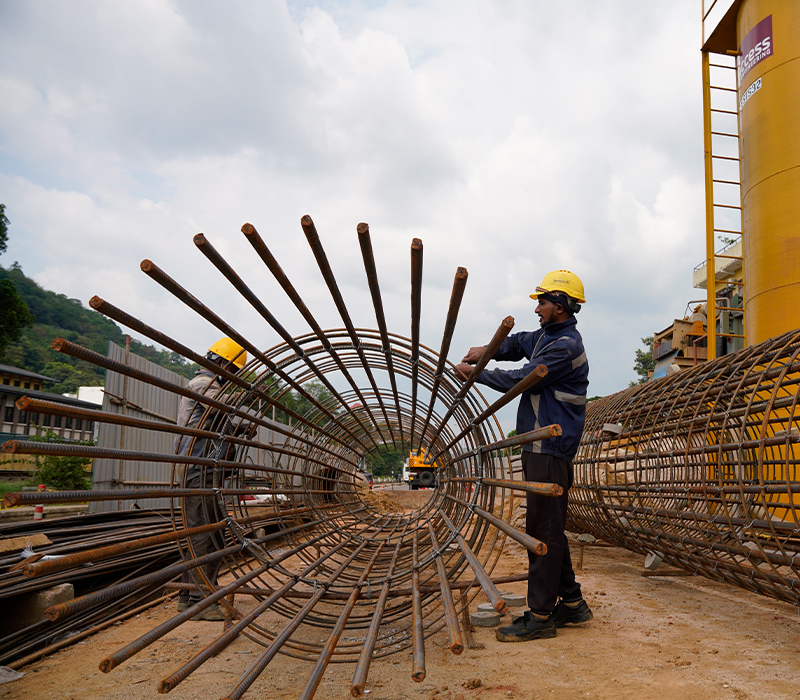
Access Engineering PLC was awarded the sub-contract to construct a flyover at Gatambe junction as a permanent solution to lessen the heavy traffic congestion at Gatambe Junction at Peradeniya.
The Gatambe junction is located at the intersection between Peradeniya and Kandy and Old Peradeniya Kandy Road (A1) and the New Peradeniya Kandy Road (AB42 – William Gopallawa Mawatha).
As a solution to ease off the traffic congestion at Gatambe Junction, the Road Development Authority proposed to erect a flyover at the junction. The proposed flyover will consist of two parts, a main flyover along the AB42 road and a branch flyover from AB42 road to A1 road towards Peradeniya direction. The main flyover shall be 429 m in length with a minimum vertical clearance of 6.5 m over the railway and 5.2 m over the road and it will comprise a two lane carriageway. The branch flyover shall be 245 m long and it will comprise a single lane carriageway. The project scope includes the necessary improvements to the junction and service roads to facilitate turning movements and route traffic along A1 road direction.

Kohuwala flyover
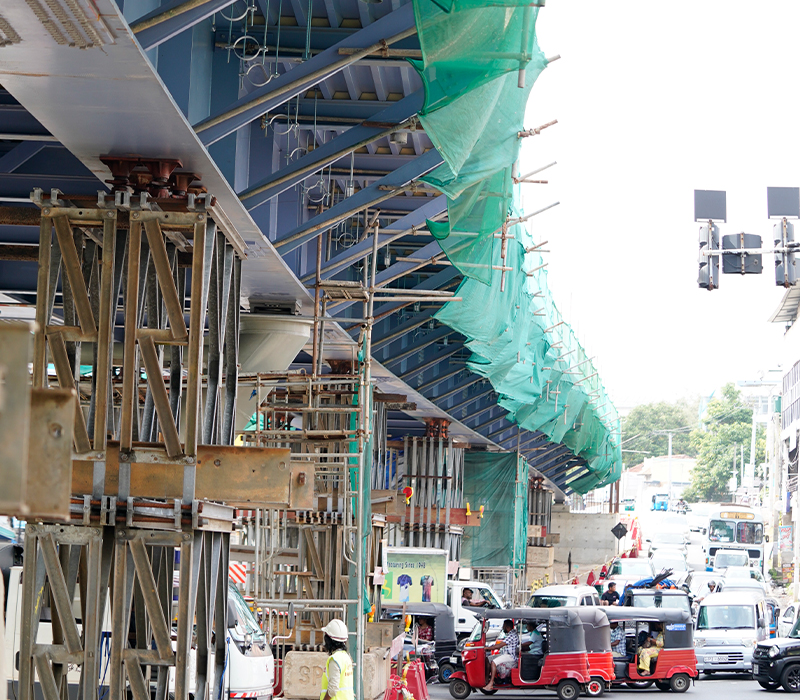
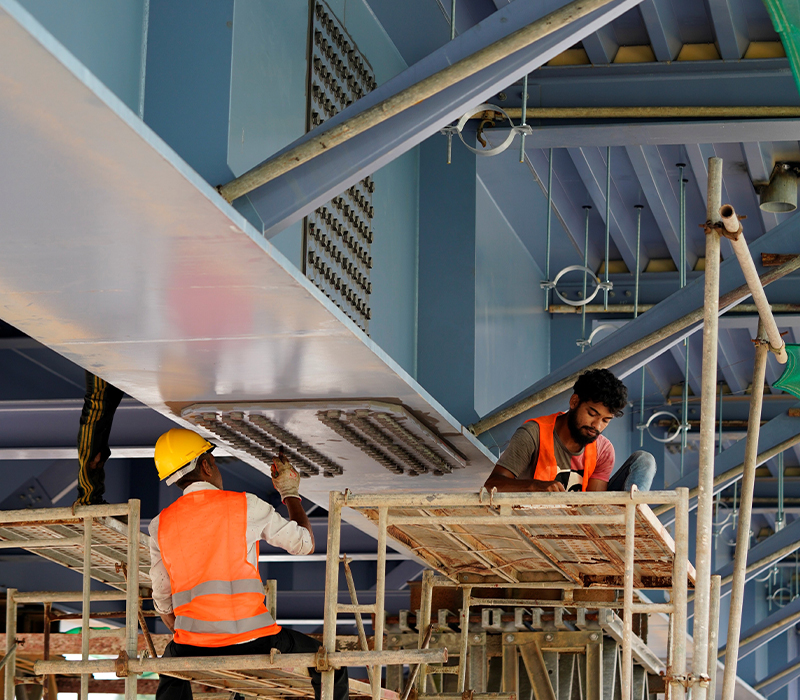
The Kohuwela Flyover Project was initiated by the Road Development Authority (RDA) under the direction of Ministry of Highways, as part of its ongoing efforts to eliminate traffic bottlenecks in the greater Colombo area.
The Kohuwela junction is a major intersection that offers connectivity between Colombo city and Colombo North and South subdivisions. Given that it is one of the busiest and most congested road junctions in the greater Colombo area, there is a high volume of traffic that passes through the intersection each day causing severe traffic congestion as well as frequent road accidents in the area. A flyover at this key intersection has therefore been a long felt need.
The proposed 297 metre long flyover will consist of a two lane carriageway, in tandem with the horizontal alignment of the existing Colombo – Horana (B84) Road and a vertical Alignment with a minimum 5.2m vertical clearance for traffic flow underneath the flyover. The structure will be facilitated with a service lane each on either side of the flyover.


T-mall Flyover Project (Kenya)
AEL was awarded the contract to construct Kenya’s first-ever steel flyover and 05 footbridges at the T-Mall junction in Nairobi. The T-Mall junction is among the busiest intersections in the whole of Kenya, with a heavy traffic load throughout the day, which worsens at the peak times between 6.30 am to 10.00 am and 4.00 pm to 7.30 pm. The flyover and the footbridges have resulted in considerable reductions in vehicle operating costs due to reduced traffic congestion.
The project initiated by the Kenya National Highways Authority (KNHA) of the Ministry of Transport Infrastructure, Housing and Urban Development of Kenya, involves the construction of a 405.8-meter-long. T – Mall flyover which is expected to largely improve the travel time of commuters in Nairobi since traffic along Mbagathi Way and Maai Mahui Roads can use the service road beside the fly over to bypass the junction.
AEL East Africa Limited is a 100% owned subsidiary of AEL incorporated in the Republic of Kenya for the purpose of undertaking the construction of Kenya’s first-ever steel flyover at the T-Mall junction in Nairobi and 05 footbridges in Nayayo, T – Mall Junction, Uhuru Garden, Barracks and Galariya.


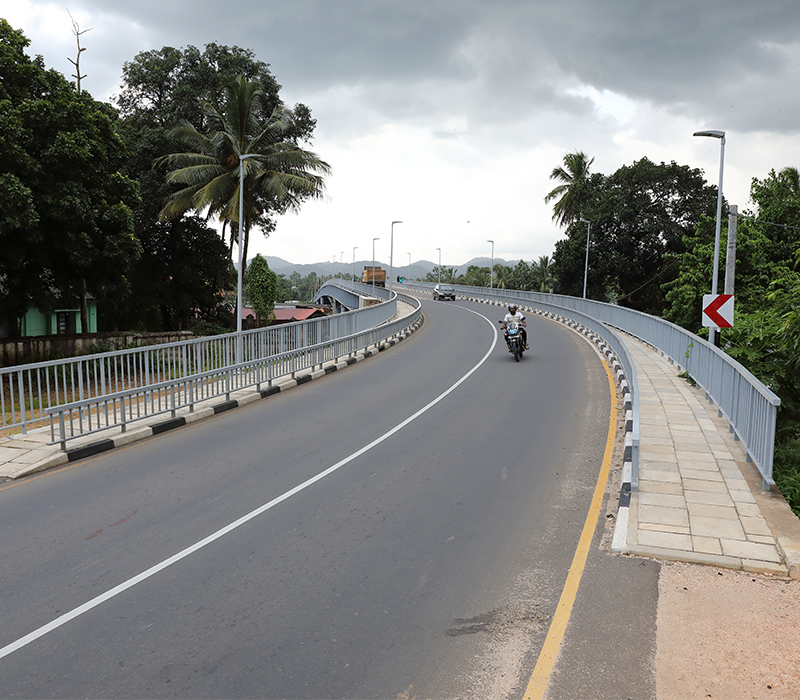
Design and Construction of Polgahawela Flyover
The project was spearheaded by the Road Development Authority under the Ministry of Higher Education and Highways and was funded by the Government of Spain. The design and supply of the superstructure was entrusted to the main contractor: Centunion S A of Spain and the design of substructure, on-site fabrication, installation, and erection was subcontracted to Access Engineering PLC along with the construction of 766 m long approach roads system
Around 130 trains travel to and fro through the Polgahawela rail junction necessitating continuous shunting of trains which leads to long gate closures for approximately 400 minutes per day at the level crossing located along Polgahawela-Kegalle Road (A19). And this causes severe traffic congestion by the sides of the level crossing.
The project which was initiated as a permanent solution to the situation at hand was to erect a 234 m long steel flyover with a 3.5 m wide two-lane carriageway and 1.5 m wide two pedestrian ways with hand railings on either side. The flyover was built on a six-span steel superstructure of which the maximum span set to 45 m in length. The approach road system comprises of a 3.5 m wide two-lane carriageway and a 1.2 m wide raised foot walks for pedestrians. The alignment of the flyover takes a detour around the existing level crossing to improve the overall road geometry while eliminating the need for extensive land acquisitions and utility relocations.


Design and Construction of Rajagiriya Flyover
The construction work of the flyover project was initiated by the Road Development Authority under the Ministry of Higher Education and Highways to mitigate the heavy traffic congestion which has long been a point of contention among daily commuters. The project was funded by the Government of Spain and the design and the supply of the superstructure entrusted to; Centunion S A of Spain as the main contractor and the design and construction of substructure, on-site fabrication, the installation and erection of the steel superstructure were subcontracted to Access Engineering PLC.
The state-of-the-art flyover is of 363 m length and accommodates four traffic lanes built on two individual decks where the width of a lane at 3.5 m. The flyover is built following the horizontal alignment of the existing Sri Jayewardenepura Mawatha with two horizontal curvatures of 257 m and 128.5 m in radius respectively and a vertical alignment with a minimum 5.2 m vertical clearance for traffic flow underneath the flyover structure. The first of its kind in Sri Lanka the flyover is constructed on steel tubular Y-shaped piers to give more clearance to the traffic going beneath the flyover.
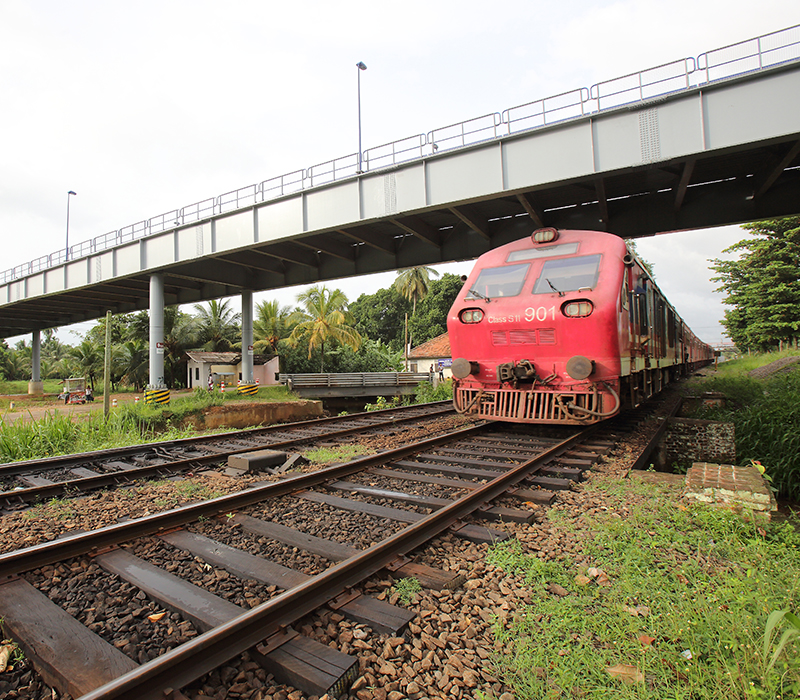
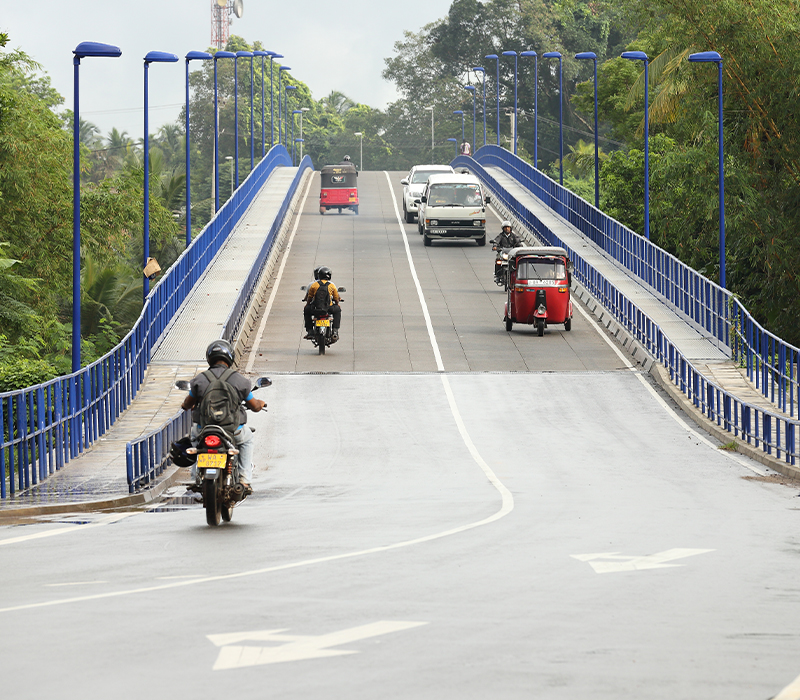

Flyover to replace railway crossing at Veyangoda
The Veyangoda Ruwanwella road provides access to Katunayake Airport from the Central and Sabaragamuwa provinces. It also links the three largest free trade zones in Sri Lanka, provides access routes to major hospitals and connects several populous towns, including Gampaha, Negombo and Nittambuwa.
The flyover consists of a steel superstructure supported by a pile foundation. The 9.4m wide carriage way consists of two lanes and has a length of 225m. The project also includes the construction of an access road of length 345m. Completed flyover will help relieve the traffic congestion in Veyangoda due to level-crossing gate closures.


Design and Construction of Kelaniya flyover
Kelaniya flyover project is the first flyover in Sri Lanka to use pre-fabricated steel for the superstructure which was assembled and erected at the site. This project was funded by EDCF U.K. and designed, supplied and constructed by Mabey and Johnson/Access Engineering Consortium for the road development authority.
The length of the flyover is 325m and it consists of 4 lanes in two separate carriageways. The sub structure involved piling, construction of abutments, piers and ramps. The superstructure was spliced and placed on piers with the support of bearing plates in a methodical system using specialized launching erection equipment. This project was executed with minimum shifting of utilities and inconvenience to the public.
Stage two of this project consisted of further 2 lanes along with service roads and has provided significant time and cost savings to commuters using the Colombo-Kandy road.


Design and Construction of Nugegoda flyover
This third flyover in Sri Lanka funded by the British Government under the regional bridge programme, was built on the high level rad at the Bo Tree junction in Nugegoda. The 261m long flyover designed and built by the Mabey and Johnson U.K./Access Engineering Consortium, consisting of 2 lanes, was constructed on pile foundations, concrete approaches and purposely curved approach slopes with a provision to slide to a side in order to facilitate a 4 lane flyover in the long term.
Overcoming many challenges to minimize the disturbance to daily commuters, this project was completed and commissioned in 100 days with minimum inconvenience to the public.